See also


 13.08.2026 12:14 AM
The USD/JPY pair reached a one-and-a-half-week high, and now bulls seek to build momentum above the 9-day EMA amid a favorable fundamental backdrop.
The initial strengthening of the yen, prompted by the first joint US–Japan intervention since 1998, lost steam because the large interest-rate gap between Japan and other major economies continues to support carry-trade activity, undermining the yen. In addition, aggressive economic stimulus and tax cuts implemented by Prime Minister Sanae Takaichi raise concerns about the deterioration of Japan's fiscal position. These factors, together with economic risks stemming from ongoing energy supply disruptions caused by the conflict with Iran, continue to pressure the yen and provide a tailwind for the USD/JPY pair.
Meanwhile, Reuters Tankan survey data showed the Japanese manufacturers' sentiment index rose from 13 in the previous month to 18 in August, reaching its highest level since March 2026. The non?manufacturing companies' indicator also increased, rising to 28 from 25 in July. Traders are increasingly pricing in the probability of another Bank of Japan rate hike, with Tokyo Tanshi data showing a 66% chance of such a move in September. However, this does not impress yen bulls or weaken the overall bullish sentiment for USD/JPY.
The US dollar, for its part, is strengthening this week amid expectations that rising oil prices will revive inflationary pressure and force the Federal Reserve toward a firmer stance. According to CME Group's FedWatch tool, traders now put the probability of a Fed rate hike by the end of 2026 at above 75%. This supports higher US Treasury yields which, combined with geopolitical uncertainty, contribute to dollar strength and to USD/JPY.
Nevertheless, traders are cautious ahead of the important US consumer price index (CPI) report. In addition, Thursday's producer price index (PPI) will influence market expectations about future Federal Reserve policy, which in turn will affect dollar demand. Events in the Middle East crisis could also significantly strengthen the dollar and USD/JPY. Still, these factors support the prospect of the pair continuing to recover from the 155.25–155.20 area, which is the lowest level since May, recorded earlier this month.
From a technical standpoint, the pair is trying to hold above the 9-day EMA. But for bulls to have a chance of further gains, they need to overcome the 100-day SMA. For now, oscillators are negative, and bears have the advantage.
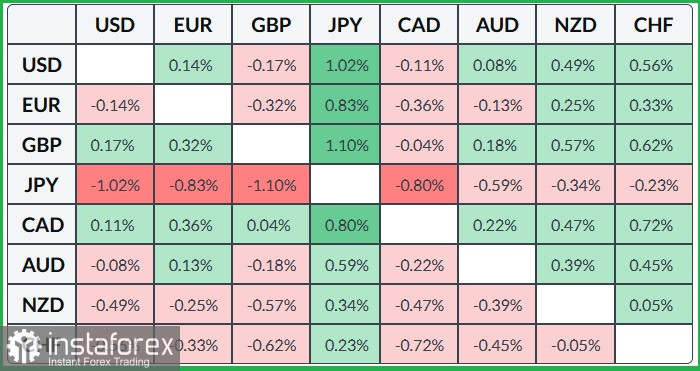
The table below shows the percentage change of the Japanese yen versus major currencies this month. The yen has shown the greatest strength against the Swiss franc.