See also


 21.01.2026 12:32 AM
On Tuesday, the EUR/GBP rate is near 0.8720, up 0.60% for the day, as the euro gains against the pound amid positive macroeconomic releases from the euro area.
The ZEW survey recorded a significant improvement in investor sentiment. Germany's economic expectations index jumped to 59.6 in January from 45.8 in December, reaching a more-than four-year high and substantially beating the consensus forecast of 50 points. The current-situation indicator also improved, rising to -72.7 from -81 a month earlier and beating expectations of -75.5.
At the euro-area level, the economic sentiment index rose to 40.8 in January from 33.7 in December, ahead of the 35.2 forecast and bolstering confidence in regional growth prospects. Data published by Destatis further support the single currency: Germany's producer price index (PPI) fell 0.2% month-on-month in December after a 0.0% reading in November, which was a slightly larger decline than expected (-0.1%). On a year-on-year basis, producer prices fell 2.5%, down from 2.3% previously, confirming easing inflationary pressure in the manufacturing sector.
Against this backdrop, the view is strengthening that price pressures are gradually normalising, reinforcing expectations that the European Central Bank will hold current monetary policy for an extended period.
In the UK, labour-market data for the three months to November are weighing on the pound. The unemployment rate was unchanged in November at October's 5.1% (the highest reading since early 2021), whereas most analysts had forecast a slight fall to 5.0%. Employment increased by 82,000 after a loss of 17,000 in the prior period. Wage growth is slowing: regular pay excluding bonuses rose 4.5% year-on-year in line with expectations but below the prior 4.6%; including bonuses, pay rose 4.7% year-on-year, slightly above forecast but below the previous period.
These readings strengthen expectations for a loosening bias at the Bank of England.
To better identify trading opportunities, attention should be paid to the UK December consumer price index (CPI) on Wednesday to assess the likely trajectory of interest rates. Last week, MPC member Alan Taylor noted that inflation could return to the Bank of England's 2% target by mid-2026, opening the way for an accelerated normalisation of policy.
The contrast between positive developments in the euro area and cooling UK fundamentals continues to support EUR/GBP appreciation.
From a technical perspective, prices have broken the boundary of the descending channel and the 20-day SMA and reached the 100-day SMA. However, they failed to hold above the 100-day SMA. Nonetheless, such an impulse suggests a higher probability that bulls will try to take control. Confirmation will come when the relative strength index moves fully into positive territory.
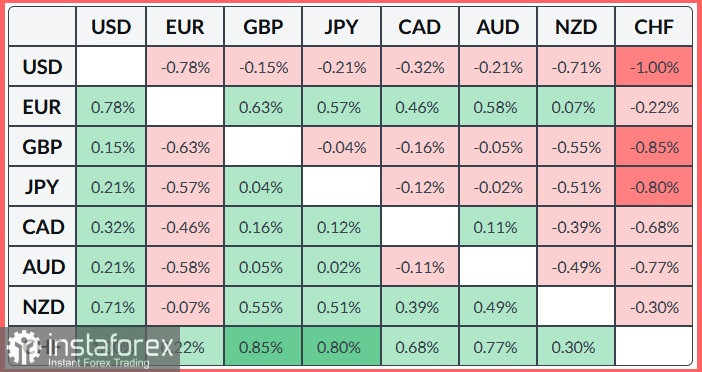
Support for the pair is now at the round 0.8700 level, while the 100-day SMA is acting as resistance. The euro is showing the largest gain against the US dollar among major currencies, as reflected in the table below, which shows the day's percentage changes.