
Lihat juga


 19.10.2026 06:17 PM

Today, Monday, gold (XAU/USD) struggled to extend its modest intraday advance during the European session. During the US session, prices fell below Friday's low, remaining within a three-week trading range and failing to reach the psychological $4,200 level. The cautious tone of Federal Reserve officials, particularly Governor Kevin Warsh's decision to refrain from further comments on the monetary policy outlook, reduced investors' expectations of policy tightening later this month. Another factor supporting the precious metal was the recent sharp decline in US Treasury yields following their rise to multi-year highs. This decline triggered a drop in the US Dollar Index to a two-week low on Friday.
Nevertheless, gold bulls failed to capitalize on this positive development, and the precious metal came under renewed pressure.
Ahead of the Fed's October 27–28 meeting, when the central bank entered its blackout period for public communications, Kevin Warsh refrained from challenging market expectations regarding interest rates, emphasizing his reluctance to "draw premature conclusions about upcoming meetings," despite data released during the week indicating higher-than-expected inflation.
US inflation data released last week exceeded forecasts, strengthening market expectations of an imminent Fed rate hike. According to CME Group's FedWatch tool, traders assign a probability of more than 90% to the Federal Reserve raising its benchmark interest rate in December. In addition, concerns about inflationary pressures stemming from rising energy prices are further reinforcing expectations of additional Fed monetary policy tightening.
On Friday, crude oil prices reached new monthly highs amid escalating geopolitical conflicts in the Middle East and Eastern Europe, increasing risks to global supply.
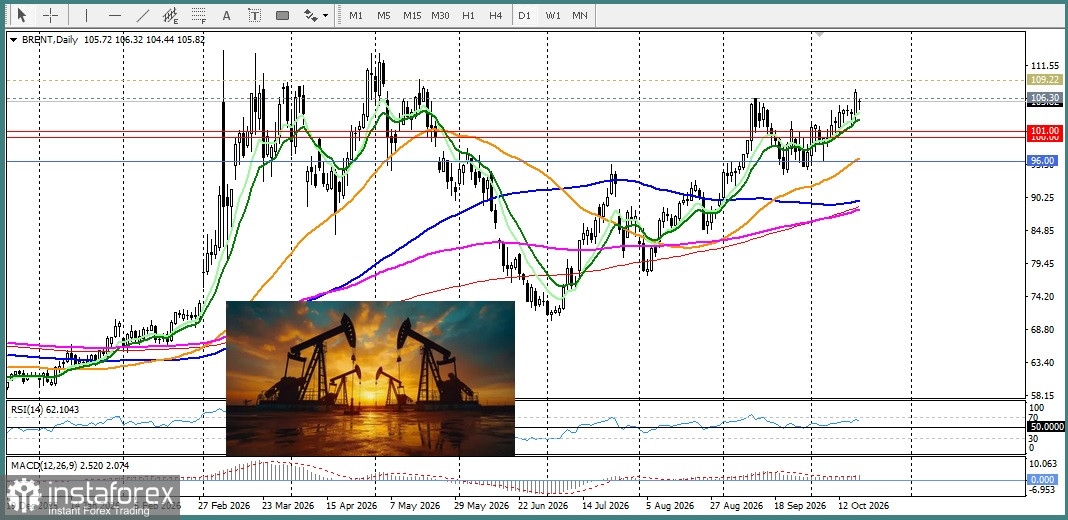
Over the past weekend, three tankers were reported damaged in the Strait of Hormuz. Meanwhile, the Iranian Islamic Revolutionary Guard Corps (IRGC) Navy stated that the strait remained under its control and that vessels could pass through only with its permission. On Sunday, fires broke out at an oil export terminal and an oil depot in St. Petersburg, Russia, following Ukrainian attacks. Kyiv deployed more than 1,000 drones, marking one of the largest aerial attacks of the entire conflict. There are also no signs of easing tensions between Saudi Arabia and Yemen's Houthi rebels, who are backed by Iran.
In addition, Mohsen Rezaei, secretary of Iran's Supreme National Security Council, warned that Tehran was preparing a new retaliatory plan in the event of renewed attacks by the United States or Israel. These developments sustain the geopolitical risk premium, which, in turn, supports oil prices and allows the US dollar, as a safe-haven asset, to recover after falling to a two-week low.
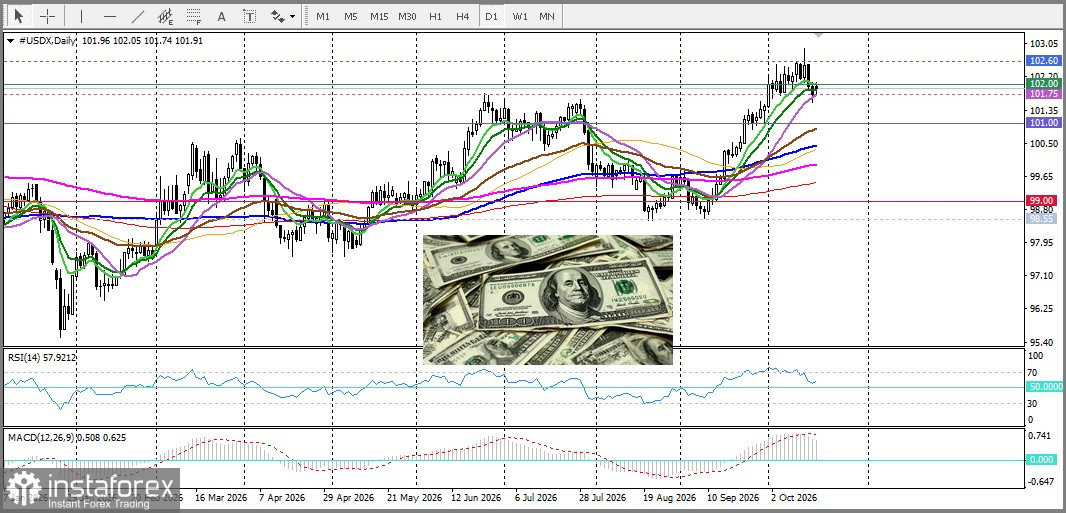
This factor limited gold's upward movement at the start of the new week and put pressure on prices of the precious metal.
From a technical perspective, the current price action within the established range can be characterized as a phase of bearish consolidation following the decline from levels near $4,700 recorded in August. Moreover, on the four-hour chart, XAU/USD is holding firmly below the 200-period simple moving average (SMA), the 200-period exponential moving average (EMA), and the 100-period SMA. This indicates that the recent advance is part of a broader correction rather than a confirmed uptrend.
Meanwhile, the Relative Strength Index (RSI) is in negative territory, while the MACD indicator remains above the zero line, indicating positive momentum, although it is weakening somewhat.
Nevertheless, a sustained move above the psychological $4,200 level is necessary to ease the current downward pressure and establish a more favorable medium-term outlook. The support zone extends toward the October low. If this support fails to hold, prices could accelerate their decline toward the psychological $4,000 level.


