
আরও দেখুন


 15.07.2026 12:49 AM
The words are not to be taken lightly; once out, they cannot be caught. Federal Reserve Governor Christopher Waller confirmed this, stating that a rate hike must be on the table if inflation data show firm price pressures. The EUR/USD reacted by dropping to a two-week low.
Waller noted the increase in core inflation from 3% in December to 3.4% in May and emphasized that the acceleration began before the March spike in energy prices due to the war in Iran. The official admitted he is determined not to repeat the mistake of 2021, when the central bank delayed its response to rising prices for too long. If another "hot" figure is released this week, the Fed will have to consider tightening monetary policy in the near future.
However, Waller acknowledged that the labor market is now far less overheated than it was during the 2022-2023 tightening. This provides a "valid argument" for reducing inflation without drastic measures. Yet, waiting for confirmation is not an option—by the time investors' confidence in disinflation evaporates, the Fed will have to catch up much more aggressively.
A similar line of reasoning is held by TS Lombard. According to them, the Fed should tighten policy to cool down the AI boom, which is creating a "dual" economy in the U.S. The firm believes borrowing costs could rise much faster than CME derivatives expect.
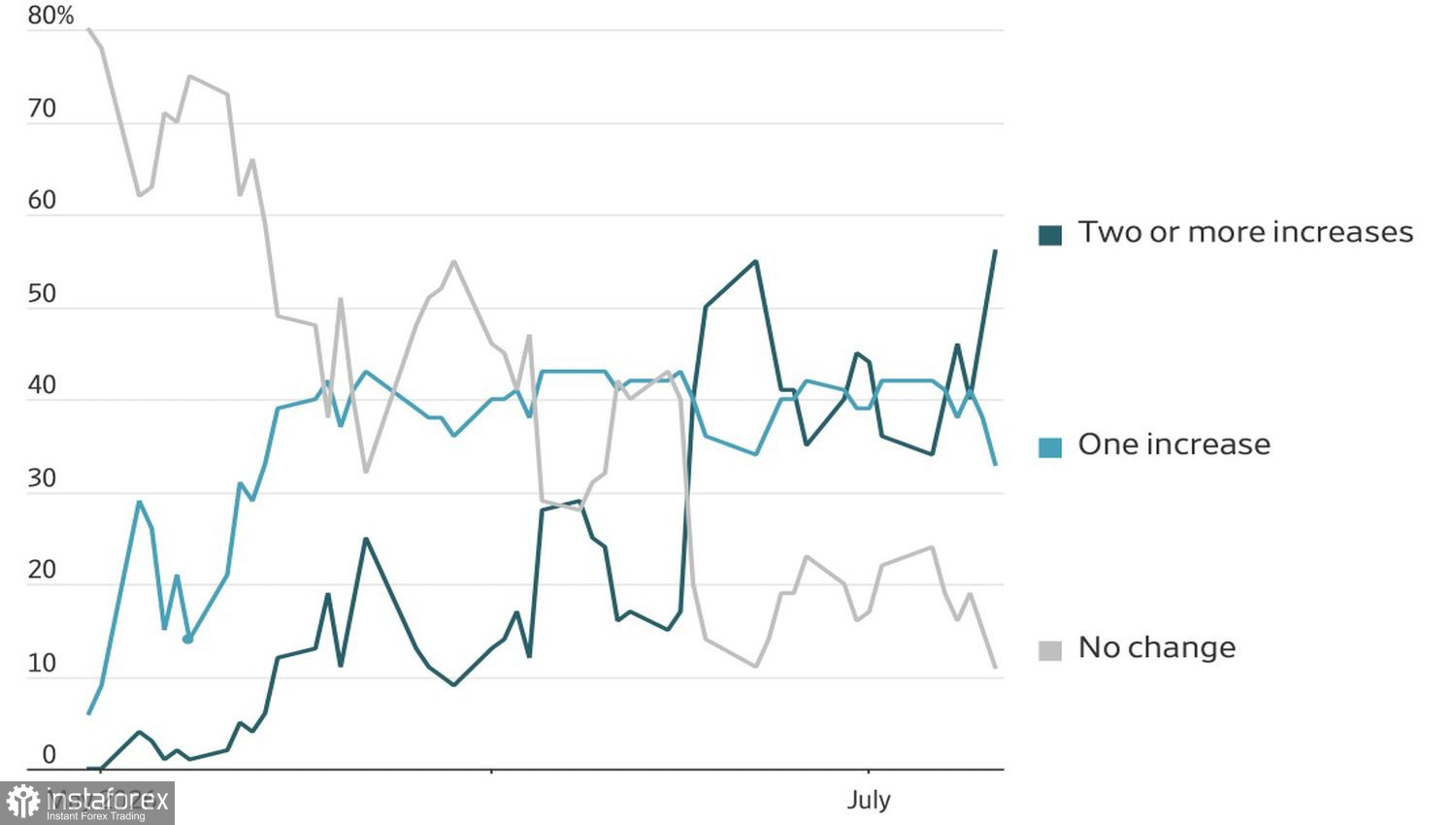
The futures market has already reacted. According to CME Group data, the chances of a rate hike in July surged to 42% from 18% at the beginning of the month, while the probability of two restrictive moves by the end of the year has risen to 56% from 34%. The resumption of hostilities between the U.S. and Iran and the rally of Brent crude to $87 per barrel have added fuel to the fire. Washington has restored the blockade of the Strait of Hormuz and demanded payment for transit.
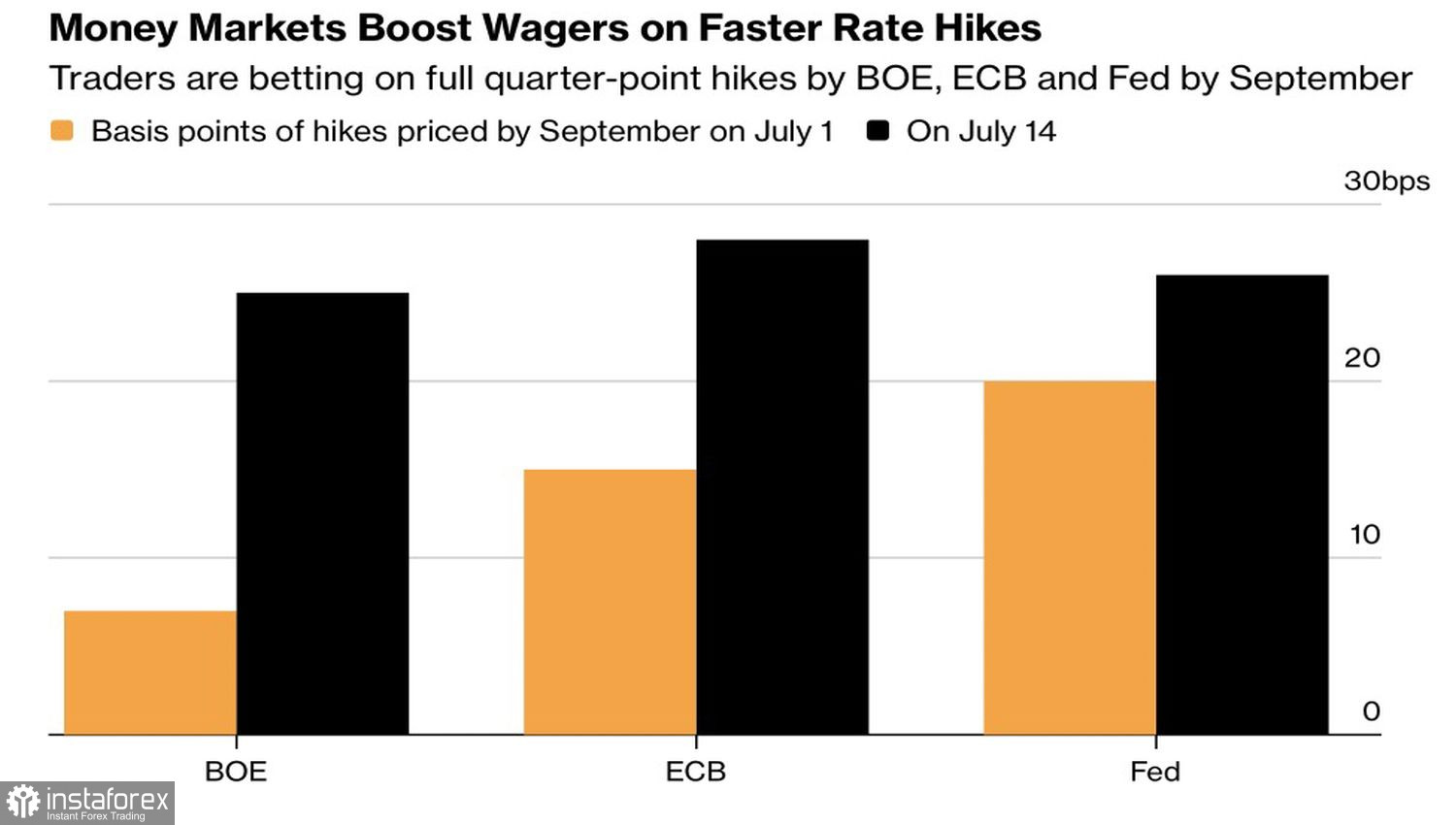
Other central banks are not standing by either. Traders are fully pricing in a 25-basis-point rate hike by the Bank of England by September, as well as a similar move by the European Central Bank. A synchronized tightening would mitigate divergence; however, the speed at which the Fed acts still determines the fate of EUR/USD.
However, there is a hidden vulnerability for the dollar. Apollo Global Management warns that the dollar rally relies on capital inflow from foreigners into American tech stocks, most of whom do not hedge against currency risk. If the AI bubble bursts, the reverse capital outflow will pose a serious risk for the dollar.
This creates a paradox: the U.S. dollar is rising on the threat of Fed tightening brought about by the very same AI boom that simultaneously serves as its Achilles' heel. Is the greenback relying too much on foreign success?
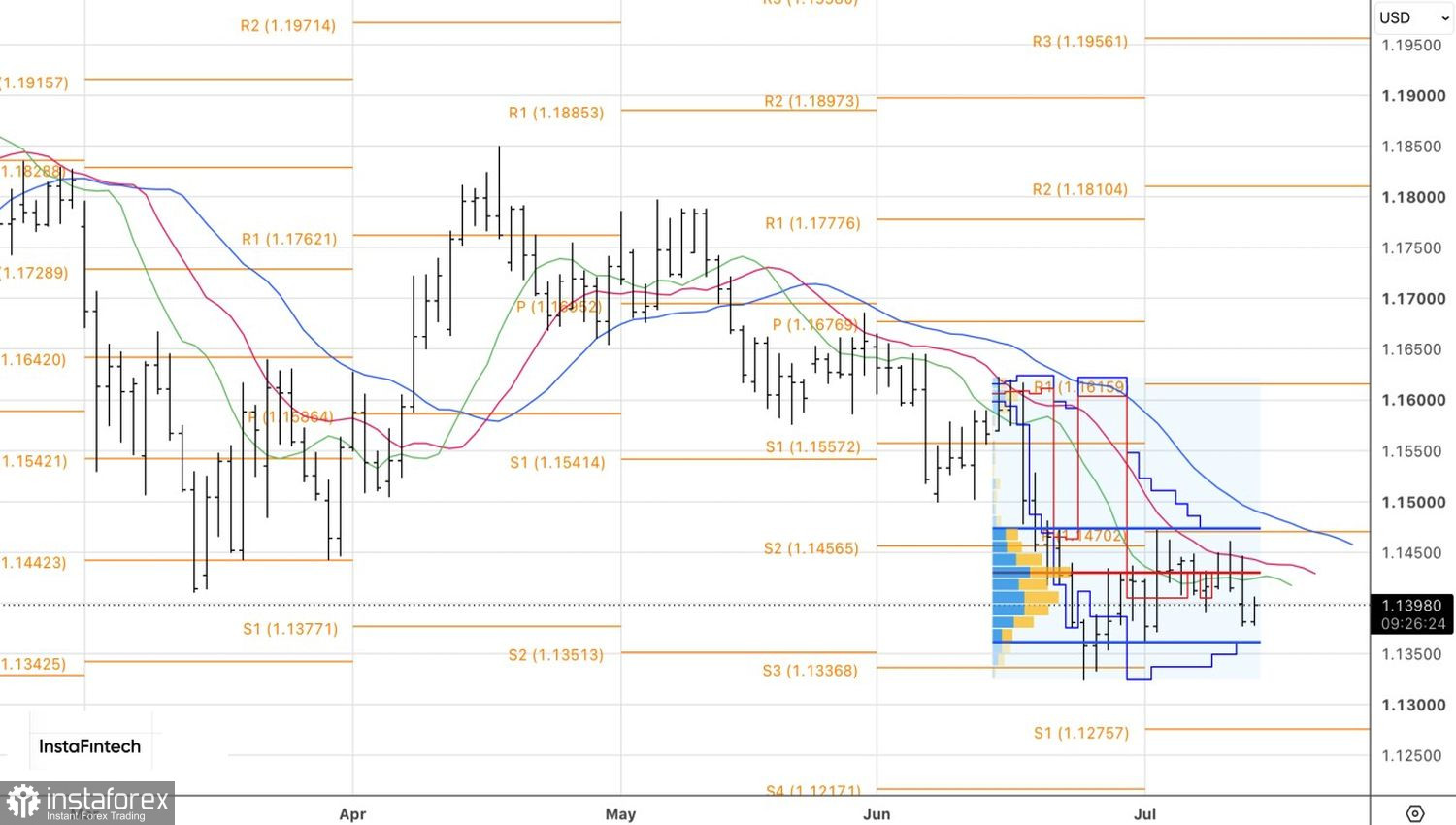
Technically, on the daily chart, EUR/USD quotes have shifted to the lower boundary of the fair value range at 1.136-1.137. If there is no breakout beyond this range in the next day or two, it will become a reason to buy.


