
আরও দেখুন


 18.06.2026 12:50 AM
The GBP/JPY cross pair was demonstrating a downward trajectory on Wednesday in response to the UK's unfavorable inflation report. However, it may not be wise to trust this downward momentum given the prevailing fundamental backdrop. The pair retains potential for further growth amid de-escalation processes in the Middle East. In the context of GBP/JPY, the British currency benefits from potential normalization in the region, as improved global risk appetite traditionally supports the pound.
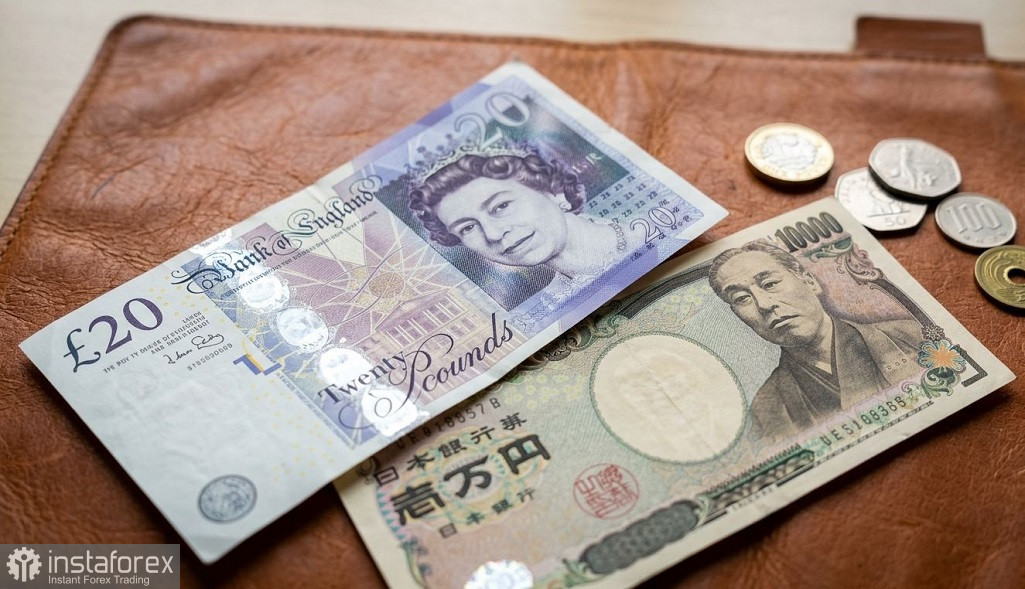
Furthermore, despite the "red" signals from all components of the published inflation report, the UK economy continues to exhibit significant resilience to external shocks. Moreover, the slowdown in inflation is largely attributed to temporary factors, while fundamental indicators of domestic demand and the labor market remain relatively stable.
Most analysts expected that the effects of the Middle Eastern conflict would push the annual inflation rate up to 3.0% in May. However, the overall CPI unexpectedly held steady at 2.8% year-on-year (the lowest reading since March of last year). The main limiting factor has been the rapid decline in the prices of basic food products. Prices for meat, vegetables, dairy, and flour are decreasing at significant rates, acting as an "anchor" for the main figures.
Yet, the slowdown in food inflation (to a 17-month low) is perhaps the only reason the overall inflation did not soar to levels of 3.1%–3.3%. The deflationary impulse from food products is already exhausting itself. First, the effects of high baselines are diminishing—food prices in the UK rose at record rates in the spring (and early summer) of last year. In the next two to three months, the comparison base will normalize, and even a slight current increase in food prices will start pushing the annual figure upwards again. Secondly, climate factors will also play a role. British and European farmers have faced adverse weather conditions this year. In particular, an extremely wet spring in the UK delayed planting, while drought in key Southern European exporting regions has impacted forecasts for grain, vegetable, and olive harvests. This sets the stage for supply shortages in the latter half of 2026, which will inevitably lead to rising wholesale prices.
All this suggests that food deflation is merely a temporary breather. As soon as the baseline effect fully dissipates (which will occur by July-August) and internal business costs and climate factors accumulate, the food sector will not be able to prevent the overall CPI from rising.
Meanwhile, the core components of the May report (services, transport, fuel) are already causing concern. Particularly noteworthy is the services sector, which is the main marker of internal inflationary pressure (and is closely monitored by the Bank of England). The annual inflation rate in this area has accelerated sharply to 3.7% from the previous 3.2% (primarily due to rising wages and internal business costs). Given that the UK economy is heavily reliant on the services sector, the BoE cannot simply dismiss this noticeable acceleration in the sub-index. On the contrary, this indicator is likely to become one of the key arguments for maintaining a cautious approach to easing monetary policy.
Many analysts believe that the BoE's chief economist, Huw Pill, who voted for a rate increase to 4.0% at the last (April) meeting, will maintain his "hawkish" stance. It is expected that 1-2 more MPC members will join him in light of the surge in inflation in the services and transport sectors. Moreover, the rhetoric of the central bank governor, Andrew Bailey, may be tougher than the expectations of most market participants if he asserts that the decline in food inflation is temporary and that risks of medium-term price acceleration remain high (especially in the context of July's increase in the energy cap by Ofgem).
In other words, the British central bank is likely to signal its readiness to maintain the rate at 3.75% "for as long as necessary." At the same time, an increasing number of votes in favor of tightening monetary policy will provide additional support for the British currency.
Meanwhile, the Bank of Japan has not become a "friend" of the yen, despite raising interest rates to 1.0% at its June meeting. The very fact of the increase was already priced in, while the accompanying rhetoric from the central bank's leadership was relatively soft. Due to Kazuo Ueda's hospitalization, the meeting was chaired by his deputies, who used cautious language and did not provide the market with clear signals on the future pace of monetary policy normalization.
Thus, the prevailing fundamental backdrop favors further growth of GBP/JPY, and it is advisable to view corrective price declines as opportunities to open long positions. The technical picture also supports this. Despite the downward momentum, the pair remains between the median and upper lines of the Bollinger Bands indicator, as well as above all lines of the Ichimoku indicator, which demonstrates a bullish "Parade of Lines" signal. The target for the upward movement is the resistance level at 215.50 (the upper line of the Bollinger Bands on the daily chart).


