
یہ بھی دیکھیں


 15.04.2026 12:37 AM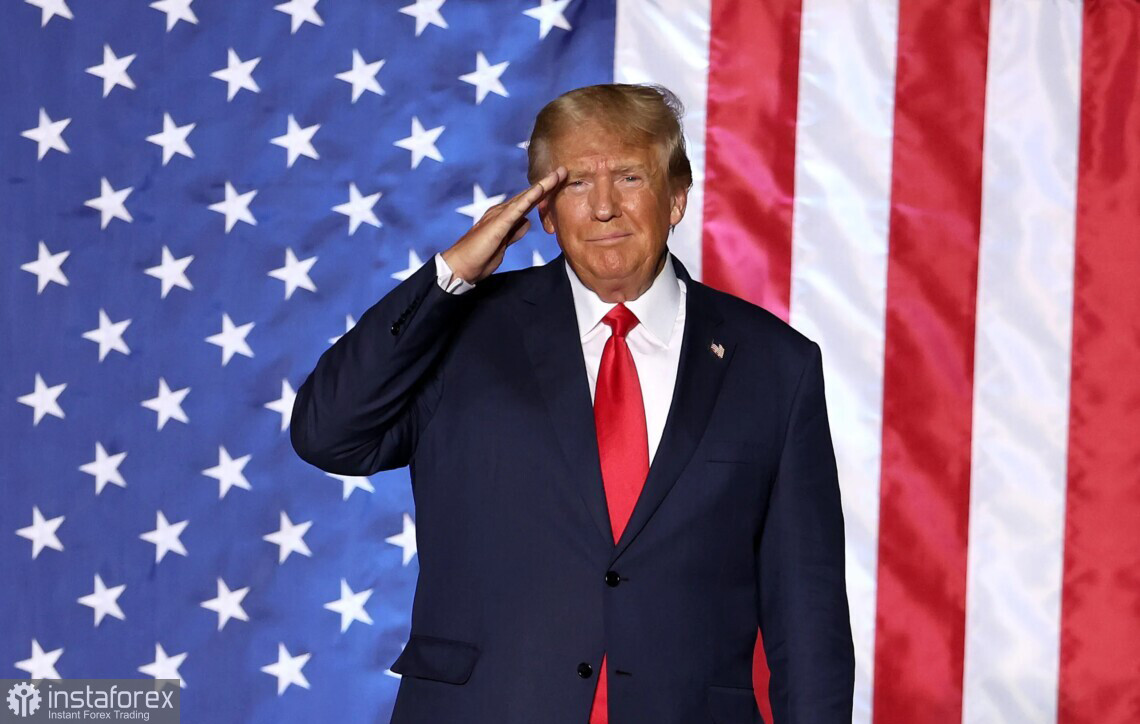
The war in the Middle East is on pause, and this may be one of the main reasons for the U.S. dollar's sharp decline over the past two weeks. Recall that last week, Iran and the U.S. agreed to a two-week ceasefire, which was violated on the first day, but then the parties managed to clarify what the ceasefire means—no one is shooting or launching missiles at each other. Therefore, there has been relative quiet in the Middle East for several days now. Unfortunately, this may be the calm before a new storm. While the U.S. is not launching an offensive or trying to seize or bomb Kharg Island, and Iran has stopped attacking U.S. allies in the region, all market participants understand that the fire could flare up at any moment with renewed vigor.
The first question that comes to mind is: what will happen in a week when the ceasefire period ends? The second question is: how will Iran react to the U.S. blockade of the Strait of Hormuz? Therefore, I still believe that a deal between Tehran and Washington is fundamentally impossible, and the conflict will continue in one form or another.
Interestingly, Tehran and Washington are generally expressing restrained optimism about negotiations. For example, Donald Trump stated on Monday that he received a call from Iran with a plea to reach a deal. The U.S. president did not deny that the sticking point remains Iran's nuclear program. According to Trump, America has made concessions to Iran on many issues, but Iran is still refusing to compromise on nuclear energy. Nevertheless, Trump stated that he believes the deal will succeed.
His deputy, JD Vance, also exudes optimism. He reported that progress was made in Islamabad on Saturday, although the parties are still far from reaching an agreement. However, he stated that there is now a basis for a future peaceful deal. Vance noted that the Iranian counterparts have made certain concessions, so it is essential to maintain the movement toward each other. However, the vice president also absolved the U.S. of all responsibility, stating that the next step lies with Iran, hinting that Tehran must show a willingness to make concessions. What is most significant is that oil prices are barely rising. This is very important for the entire world.
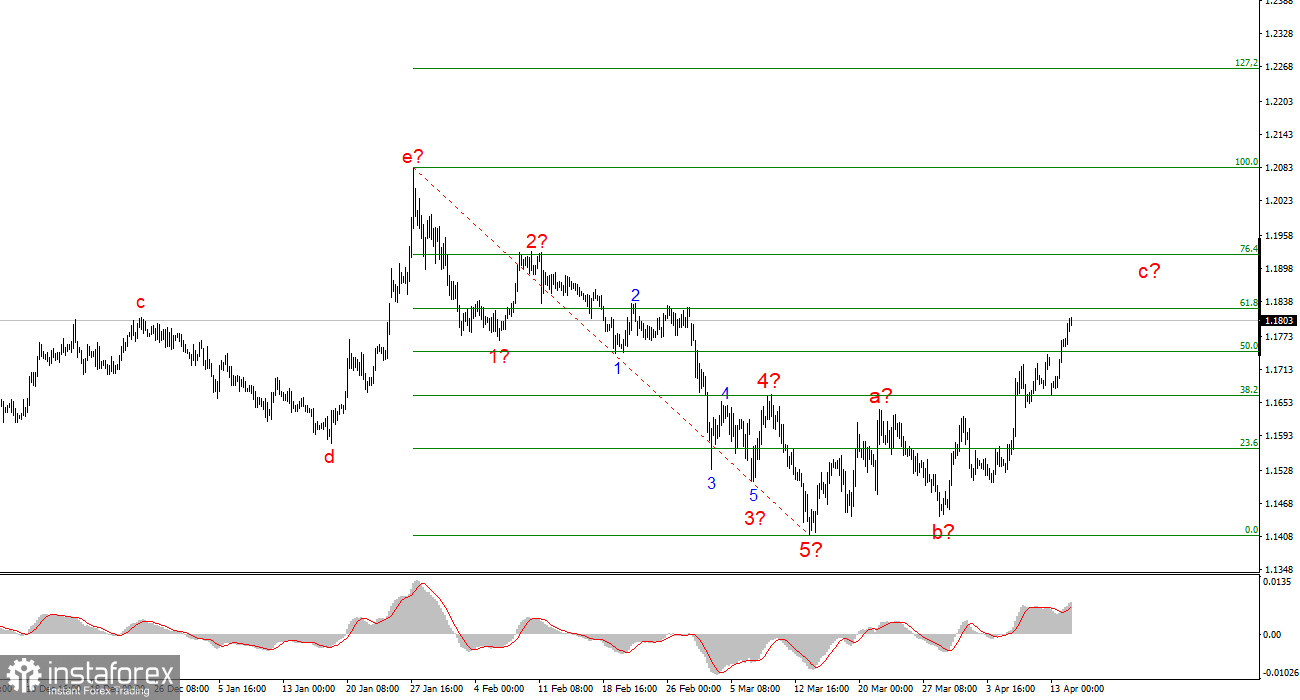
Based on the analysis of EUR/USD, I conclude that the instrument remains in an upward trend (bottom picture) and, in the short term, is in a corrective structure. The corrective wave set looks quite complete and can only take on a more complex, elongated form in one case—if a stable ceasefire is established between Iran, the U.S., Israel, and ALL other countries in the Middle East. Otherwise, I believe that a new downward wave set may begin from the current positions. A failed attempt to break the 1.1824 mark may lead to a price retreat from the recent highs.
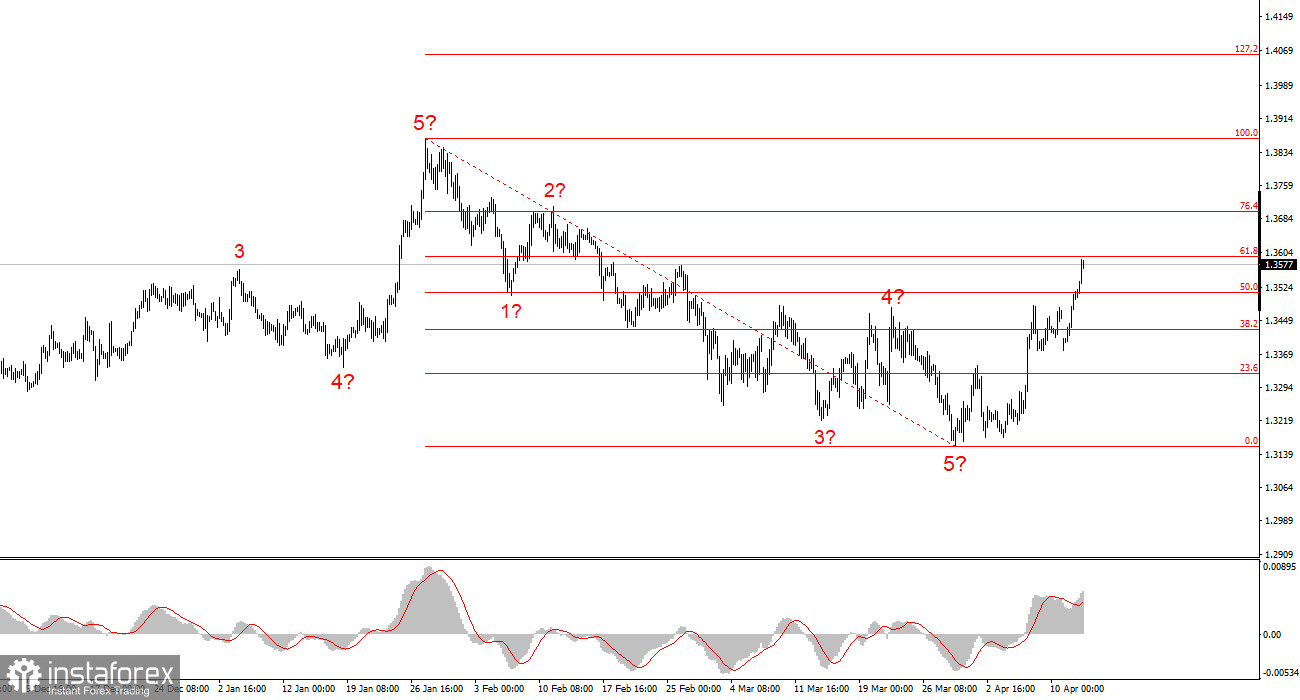
The wave picture of the GBP/USD instrument has become clearer over time, as I had assumed. Now we see a clear five-wave downward structure with an extension in the third wave on the charts. If this is indeed the case, and geopolitics does not provoke a new collapse of the instrument in the near future, we can expect the formation of at least a three-wave corrective structure, within which the pound may rise to the levels of 1.3594 and 1.3698, corresponding to 61.8% and 76.1% Fibonacci levels. If a ceasefire is reached, the corrective segment of the trend may turn into an impulsive one. A failed attempt to break through the 1.3594 mark could cause prices to retreat from the reached peaks.


