यह भी देखें


 29.09.2026 11:11 AM
On Tuesday, the XAU/USD pair is showing a moderate recovery, trading slightly below the $4,150 level. However, the unfavorable fundamental backdrop is keeping the precious metal near the round $4,100 level.
The hawkish stance of the U.S. Federal Reserve, high U.S. Treasury yields, and geopolitical risks are supporting the U.S. dollar near a two-month high, limiting the upward potential for gold prices and calling for caution when opening positions based on expectations of a substantial increase in its price.
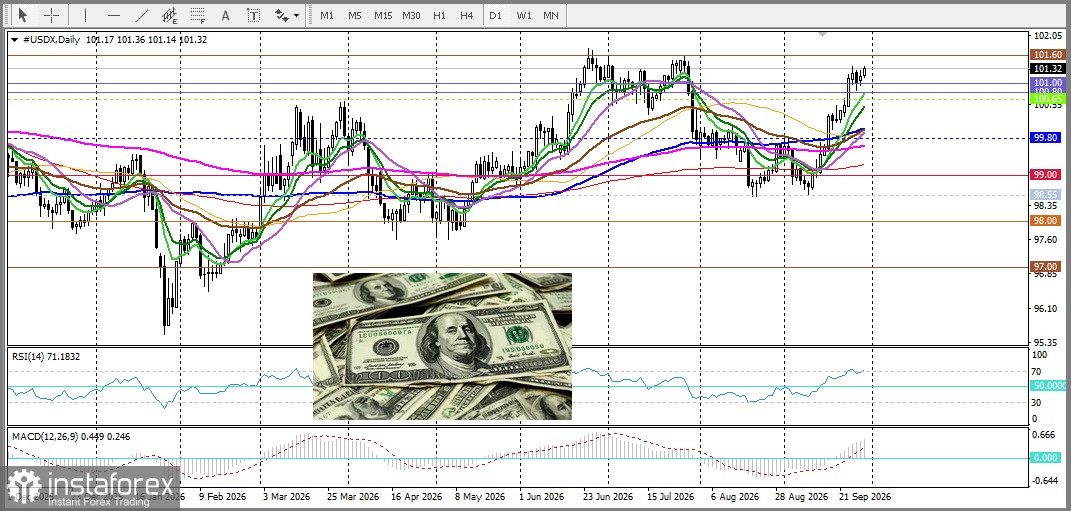
Federal Reserve Governor Adriana Kugler emphasized persistent inflationary pressures associated with the development of artificial intelligence and geopolitical risks, maintaining the Fed's hawkish stance. Her remarks, which received a score of 7 out of 10 from the FXS Speechtracker, above the baseline level of 6.9, point to continued inflationary pressure in the coming months. Kugler noted that future rate changes will depend on inflation data and labor market conditions, while emphasizing that productivity gains from AI could help slow inflation, but not quickly enough to offset current inflationary risks. The FXS Fed Sentiment Index declined by 0.63 points to 146.89, indicating a moderate easing of hawkish sentiment; however, the Fed's stance remains clearly hawkish. This means that any future rate hikes or the maintenance of rates at high levels will continue to support the U.S. dollar, even despite a slight cooling in market expectations.
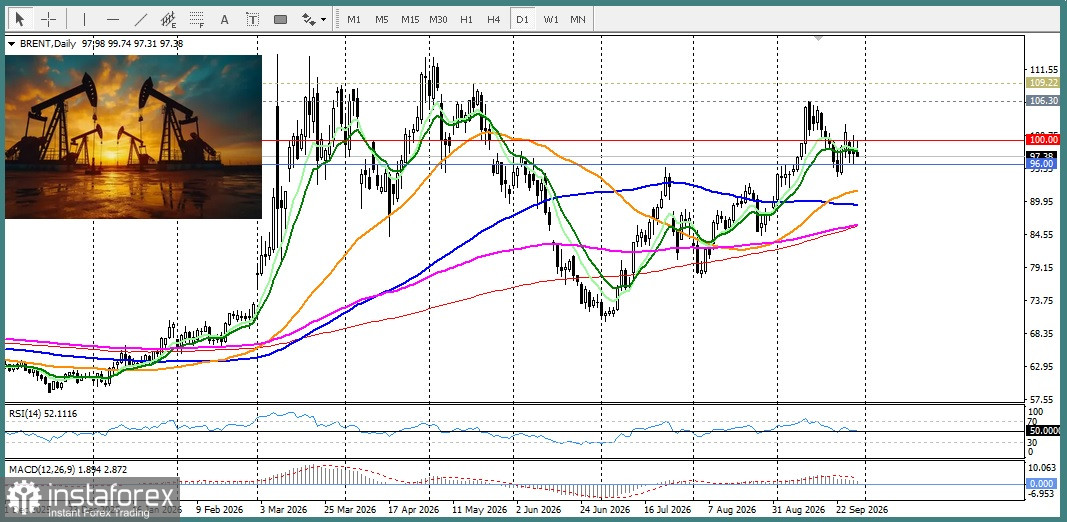
Meanwhile, U.S. President Donald Trump rejected an Iranian peace proposal concerning the settlement of the military conflict and the reopening of the Strait of Hormuz if Tehran's demands were met. Trump also denied reports that he had offered Iran sanctions relief and the unfreezing of assets in exchange for specific steps regarding its nuclear program. Continued geopolitical tensions are keeping crude oil prices at high levels, increasing inflation concerns and pushing U.S. Treasury yields toward multi-year highs.
Market participants would be better advised to wait for the release of important U.S. macroeconomic data this week before opening significant directional positions in the XAU/USD pair.
On Wednesday, the Personal Consumption Expenditures (PCE) Price Index, a key inflation indicator monitored by the Fed, is due to be released, along with the final second-quarter GDP data. On Thursday, the ISM Manufacturing PMI will be released, but the main focus should be on the U.S. Nonfarm Payrolls (NFP) report, which will be published on Friday. In addition, speeches by influential FOMC members will also affect the market. This, in turn, will influence demand for the U.S. dollar and provide significant momentum for gold prices.
From a technical perspective, the XAU/USD pair maintains a bearish bias following the recent downside break of the 200-day exponential moving average (EMA). The oscillators are negative, confirming the bears' advantage in the market. The round $4,100 level provides support. The nearest resistance will be the 4170–4200 level. However, the key resistance levels before bearish pressure weakens are the important moving averages, including the 200-day EMA. The oscillators are negative, confirming the bears' advantage in the market.
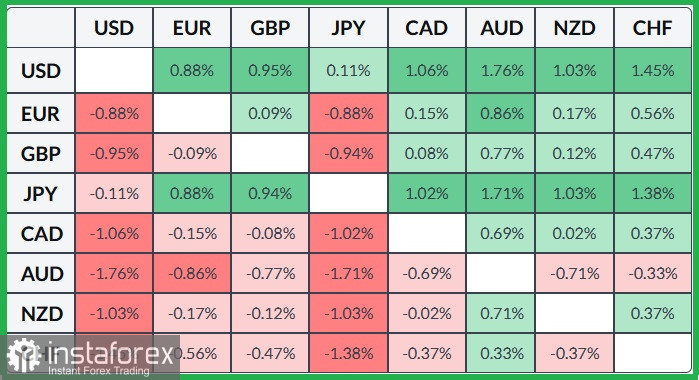
The table below shows the percentage change in the U.S. dollar's exchange rate against major currencies over the past 7 days. The U.S. dollar recorded its largest gain against the Australian dollar.