
আরও দেখুন


 03.06.2026 12:39 AM
Markets began factoring in the odds of conflict resolution in the Middle East since the ceasefire regime commenced in April. By the third decade of May, the chances for peace had significantly increased following Donald Trump's statements about a forthcoming deal. However, the situation remains stagnant: the parties intermittently attack each other, and Iran's announcement of a withdrawal from negotiations has lowered EUR/USD quotes.
Angered by Israel's attack on Lebanon, where Iran-backed Hezbollah is based, Tehran threatens not only to halt dialogue with the Americans but also to close the alternative oil supply route—the Bab-el-Mandeb Strait. The escalation of the conflict and new supply issues risk driving Brent prices higher, which is unwelcome not only for the US but also for Europe.
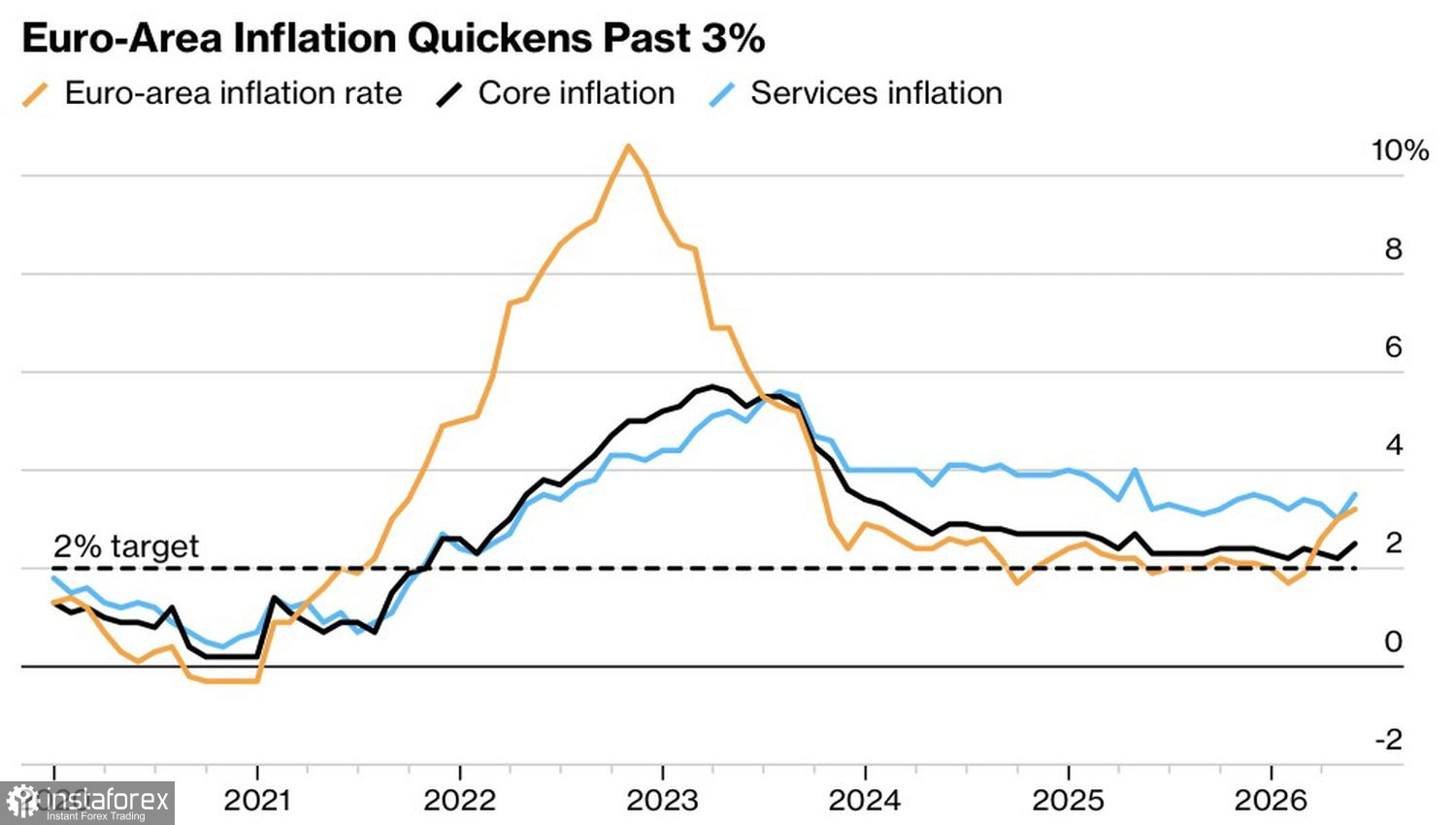
Consumer prices in the Eurozone accelerated in May from 3% to 3.2% due to higher crude oil prices, while core inflation surged to 2.5% and service prices rose to 3.5%. The European Central Bank's fears regarding second-order effects are coming to fruition, making a rate hike in June inevitable.
However, this factor is already priced into EUR/USD quotes, as well as another anticipated act of monetary tightening expected by the futures market. The main question is whether the already fragile Eurozone economy can withstand higher borrowing costs. Tightening monetary policy may not just be a blow but could turn into a political error for the ECB—similar to the one made before the 2008 global economic crisis, when the ECB raised rates and then had to cut them due to a recession.
Nevertheless, regardless of how weak the Eurozone economy may be and how high the risks of a political error by the ECB, EUR/USD will likely trend upwards in the event of a resolution to the Middle East conflict. In this scenario, the White House's mantra about the temporary nature of high inflation in the US will prove true. The Federal Reserve would have the opportunity to resume its cycle of loosening monetary policy, which would be a significant blow to the US dollar.
During the initial phase of peaceful conflict resolution in the Middle East, the greenback will likely suffer as a safe-haven currency. This scenario is the baseline, but far from the only one. The gulf in positions between the US and Iran does not eliminate the possibility of hostilities resuming. In this case, escalation, rising geopolitical tension, and worsening global risk appetite will serve as catalysts for a decline in the main currency pair.
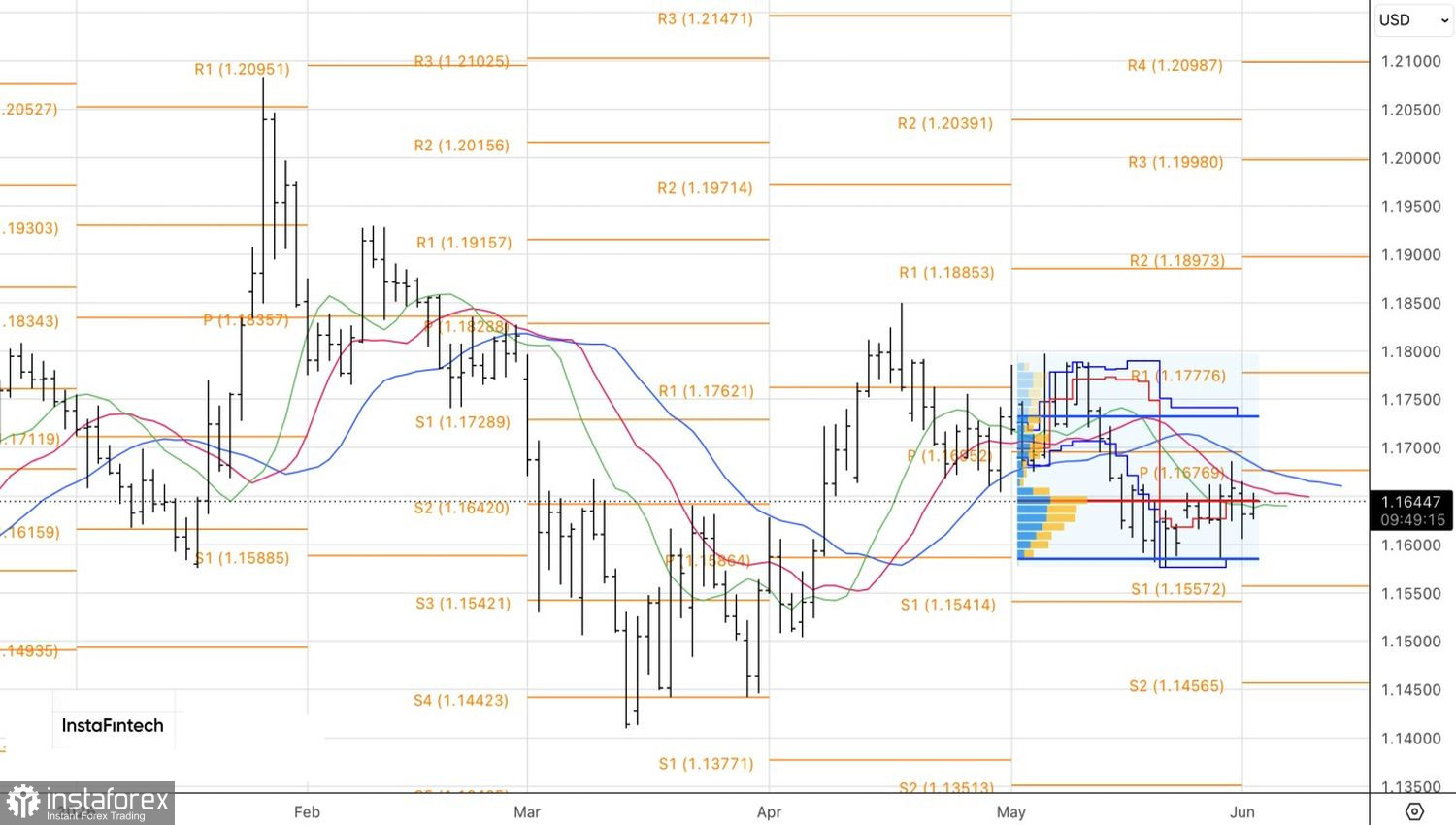
Technically, a daily candle with a long lower shadow has formed on the EUR/USD chart. This indicates the bears' weakness, especially if the candle's body is not very large. This is not the current case; conservative traders should refrain from trading. For aggressive traders, it is possible to set a pending long position at the candle's high near 1.1665.


